
Employee Performance Evaluation: Role and Importance in Growth
In today’s modern workplace, job performance evaluation has become a core tool organizations rely on to achieve their goals and motivate employees to deliver their best possible performance. It goes beyond being a purely numerical or administrative exercise; it is a fundamental employee right and a mechanism for ensuring fairness and healthy competition among colleagues. Through effective evaluation, organizations can identify employees’ strengths and weaknesses, link performance to training opportunities, promotions, and rewards, and ultimately support both professional and career development.
However, some employees may face unfair situations or receive unsatisfactory evaluations, which highlights the need to understand the legal and administrative channels available to challenge such assessments and protect employee rights. As a result, performance evaluation is a sensitive process that demands clear criteria and transparent communication. When handled properly, it ensures meaningful benefits for both employees and the organization alike.
What Is Job Performance Evaluation?
Job performance evaluation is a structured process designed to measure an employee’s level of performance and compare actual results against predefined standards, with a strong focus on identifying areas for improvement and development. This evaluation should be based on clear, objective criteria so that it effectively contributes to:
Improving overall organizational effectiveness
Motivating employees through rewards and promotions
Enhancing individual and team performance
When a performance evaluation system fails to achieve these goals, it risks becoming a routine and frustrating exercise for both employees and managers. In such cases, it adds little real value to the organization, contradicts the principles of effective team management, and ultimately weakens collective performance across the workplace.
Types of Job Performance Evaluation
1. Informal Evaluations
Informal evaluations are relatively common and occur when an employee receives performance feedback from their direct manager or a delegated supervisor. These evaluations can take several forms:
Quick conversations about daily workflow
Written notes on performance quality
Guidance for improving performance
When using a management-by-exception approach, employees may only receive feedback when mistakes occur or performance drops. These evaluations are usually not recorded in official files and aim to provide continuous, simple performance corrections.
2. Formal (Systematic) Evaluations
Formal evaluations are more structured and official, typically documented in a written form that includes:
Key job responsibilities
A scale indicating whether performance meets, exceeds, or falls short of expectations
The evaluation is shared with the employee, followed by a formal meeting to discuss results and set a plan for future performance improvement.
These evaluations are highly significant because they:
Are kept in the employee’s record
Are used for promotions and salary increases
May serve as official documentation for critical administrative decisions
The Importance of Positive Evaluation
The primary goal of performance evaluation is not merely to classify or conduct annual reviews, but to inspire employees to achieve better results. A well-designed evaluation system should:
Motivate employees to develop their skills
Enhance teamwork and collaboration
Add real value to both the work and the organization
Support the achievement of organizational goals at both individual and team levels
Conversely, a negative or unfair performance evaluation system can lead to frustration, loss of motivation, and a detrimental impact on both individual and team performance.
The Role of Evaluation in Performance Management
Evaluation is a fundamental component of performance management, whether conducted formally or informally. It must be supported by a clear system that measures how well an employee’s performance aligns with the required standards.
Using Evaluation Results
Evaluation results play a pivotal role in enhancing both individual and team performance. Key applications include:
Guiding future performance: Identifying strengths and weaknesses and creating clear development plans.
Skill development: Designing targeted training programs to enhance employee capabilities.
Improving individual and team outcomes: Boosting team efficiency by monitoring performance and coordinating efforts.
Assessing the Entire Team
When a complete team is evaluated effectively, it becomes possible to develop a comprehensive performance management plan that directs the entire team toward achieving organizational goals.
Five Steps for Effective Employee Performance Evaluation in Human Resources
1. Set SMART Goals
The first and most important step is to set clear goals for each employee. These goals should align with company and departmental objectives and be measurable and achievable. This is where the SMART framework comes into play:
Specific: Clearly define what is expected from the employee.
Measurable: Evaluate goal achievement through numbers or results.
Achievable & Realistic: Goals should match the employee’s capabilities and market conditions.
Time-bound: Set a clear timeframe for completion.
To ensure fair evaluation, the year should begin with SMART goals. Here’s a comparison between traditional and SMART goals:
| Traditional Goal (Weak) | SMART Goal (Strong) |
|---|---|
| “Improve company sales” | “Increase SUV sales by 15% in Q3” |
| “Recruit quickly” | “Hire 5 software engineers within 45 days with a defined budget” |
2. Continuous Monitoring and Support
After setting goals, the direct manager should continuously monitor employee performance, which includes:
Observing employee behaviors and work performance in real time
Providing regular feedback
Offering necessary coaching and guidance to enhance performance
Ongoing monitoring helps detect issues early and ensures goals stay on track.
3. Employee Self-Evaluation
Self-evaluation allows employees to assess their performance before the manager does. This should cover:
Results achieved versus the set goals
Alignment of behaviors with company values and principles
Key accomplishments, missed opportunities, and areas for future development
This step raises employee self-awareness and helps managers understand the employee’s perspective.
4. Understanding Employee Patterns
Every employee has a unique approach to self-evaluation:
Objective Employee: Accurately evaluates themselves based on evidence.
Self-Critical Employee: Undervalues their performance and feels inadequate.
Overconfident Employee: Overestimates their abilities.
Identifying these patterns helps managers interpret evaluations accurately and create tailored development strategies.
5. Final Evaluation and Gathering Feedback
The final step involves consolidating all the information to conduct the formal evaluation:
Employee self-evaluation
Direct manager’s assessment
Feedback from colleagues and internal/external clients
Input from subordinates, if the employee is a supervisor or manager
The manager then meets with the employee to discuss results, clarify goal achievement, and set future development plans and objectives for the upcoming period.
Modern Tools to Enhance Evaluation Objectivity
Performance evaluation no longer relies solely on the direct manager’s perspective. Leading organizations have increasingly adopted 360-degree evaluation, a system that gathers feedback from peers, subordinates, and even clients, providing a comprehensive and fair view of an employee’s performance and behavior.
Modern technology has further enhanced this process. Tools such as time-tracking and task management software allow performance to be linked to clear, measurable Key Performance Indicators (KPIs). This approach reduces human bias, ensures continuous documentation of achievements, and maintains consistent accountability throughout the year.
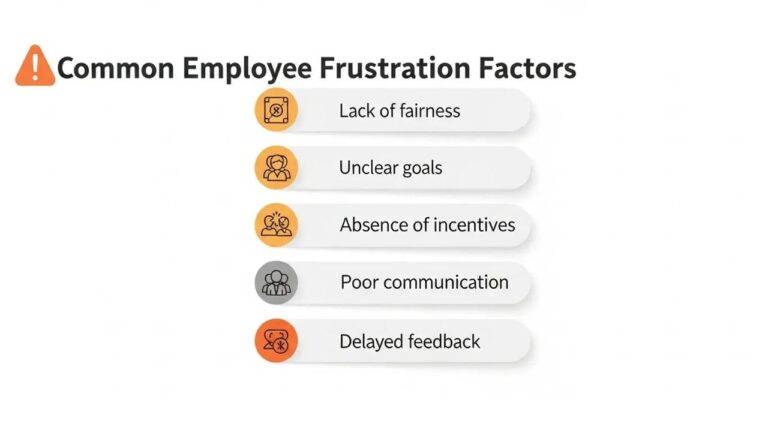
Factors That Frustrate Employees in Performance Evaluation
Research and organizational studies have shown several factors that can frustrate employees during performance evaluations, including:
Lack of fairness: Using inappropriate or biased evaluation criteria.
Unclear goals: Setting unrealistic performance indicators or goals that don’t match the nature of the work.
Absence of motivation and rewards: Failing to link evaluations to tangible rewards or promotions.
Poor communication: Lack of ongoing dialogue between managers and employees about performance.
Delayed feedback: Waiting an entire year to provide evaluations instead of offering continuous feedback.
Addressing these issues is crucial for creating a fair, motivating, and effective performance evaluation system that enhances both employee engagement and organizational success.
How Should a Performance Evaluation System Be Designed?
To avoid drawbacks and maximize effectiveness, a performance evaluation system should be:
Objective: Built on clear, specific criteria that match the nature of the work.
Comprehensive: Measures performance at three levels—individual, team, and organization.
Motivational: Links performance to rewards and professional development opportunities.
Interactive: Includes one-on-one evaluation sessions, allowing employees to share their views and provide feedback.
Continuous: Goes beyond year-end reviews with regular check-ins to ensure ongoing performance improvement.
Job performance evaluation is a strategic tool that goes beyond merely measuring employee performance. It helps motivate staff, develop their skills, and support the creation of high-performing teams by linking individual achievements to organizational goals.
For it to be effective, the system must be objective and fair, motivating and inspiring, based on ongoing dialogue and feedback, and tied to tangible results at both the individual and organizational levels. When implemented correctly, performance evaluation becomes a driving force for improving overall performance, boosting productivity, fostering collaboration, and creating a happier, more engaged work environment—ultimately contributing to the development of successful and sustainable teams.
FAQ
- February 3, 2026
- PeakTime Team
- 12:39 pm
أحدث المقالات
Recent Posts
- Fundamentals of Performance Management: Your Path to Administrative Excellence

- Performance Improvement Plan (PIP): Effective Strategies for Managing Underperformance in Organizations

- Employee Performance Measurement Using Key Performance Indicators (KPIs)

- Employee KPIs: A Strategic Tool to Boost Performance and Foster a Culture of Excellence

- Job Performance Evaluation: Its Role and Importance in Organizational and Employee Development
