1. Setting Clear Goals
Define specific, clear, and measurable objectives.
Align goals with the company’s vision and strategy to ensure integration.
2. Task Division and Responsibility Assignment
Create a clear task map and assign responsibilities to each team member.
Minimize duplication and facilitate teamwork.
Utilize agile management methods like Agile and Scrum to review tasks regularly.
3. Choosing the Right Tools and Technologies
Selecting appropriate digital tools is fundamental for managing remote teams effectively, ensuring smooth communication and clear task management. These tools can be categorized into two main types:
Communication Tools:
Zoom: High-quality video meetings and virtual conferences with ease of use.
Slack: Instant messaging platform with topic-based channels for organized team communication.
Microsoft Teams: An integrated workspace combining chats, calls, and meetings, with strong integration with Microsoft Office.
Task Management Tools:
Trello: Uses Kanban boards for visual task management and progress tracking, suitable for small to medium teams.
Peak Time: A tool tailored to the Saudi market, specialized in time tracking and project task management, with analytics and productivity monitoring features.
4. Building a Culture of Effective Communication
Managing remote teams is not just about tools—it requires cultivating a clear and impactful communication culture that fosters connection and trust. This can be achieved through:
Establishing Communication and Meeting Policies:
Set clear guidelines for regular meetings, official communication channels, and meeting protocols.
Organize time efficiently, ensure participation, reduce message chaos, and vary communication styles based on task nature and team size.
Encouraging Open Dialogue and Mutual Support:
Create an environment where team members can freely express ideas without fear of negative criticism, fostering belonging and innovation.
Promote active listening, respect diverse perspectives, and provide constructive feedback to boost morale and collaboration.
Organizing Virtual Social Gatherings:
Informal virtual activities, such as interactive workshops, strengthen bonds and reduce isolation.
These activities build trust and support better coordination in daily tasks.
5. Performance Monitoring and Regular Evaluation
Continuous performance tracking and periodic evaluation are essential for managing remote teams, ensuring clarity of achievements and timely resolution of challenges.
Performance Reports and Metrics:
Use measurable Key Performance Indicators (KPIs) such as work quality, task completion speed, deadline adherence, and goal achievement.
Periodic reports help track and analyze these indicators, allowing management and teams to identify strengths and weaknesses and implement improvement plans.
Providing Constructive Feedback and Team Motivation:
Constructive feedback is crucial for performance development, focusing on behaviors and results, while offering solutions or alternative support.
Motivating the team through recognition, rewards, and continuous development opportunities enhances commitment and job satisfaction.
Adopting an open and regular evaluation system fosters a culture of continuous improvement, supporting efficiency and productivity.
6. Addressing Remote Work Challenges
Time Management and Minimizing Distractions:
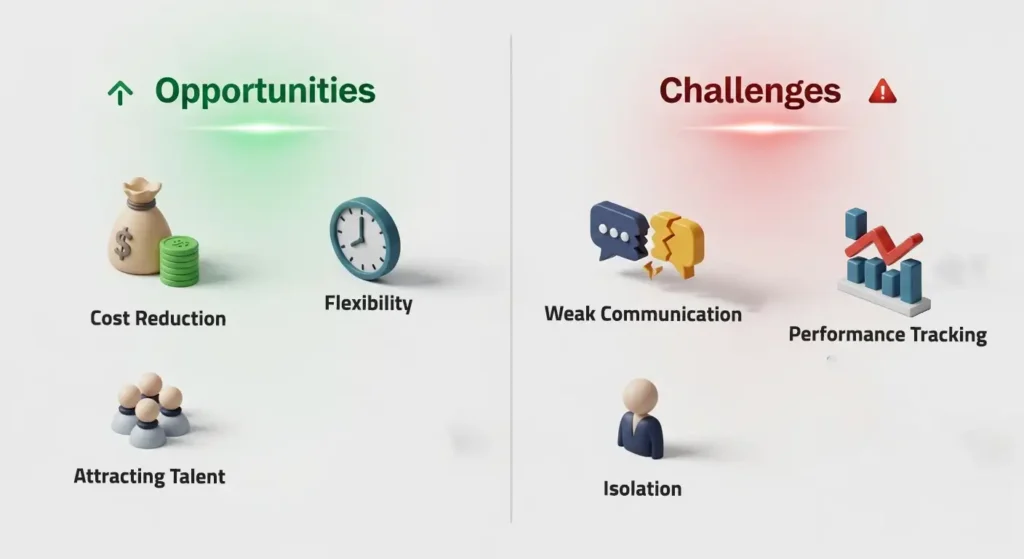
Time management is a major challenge, especially in home environments full of distractions.
Overcome this by setting clear schedules, allocating focused work periods, and using techniques like the Pomodoro method (25 minutes of work followed by a short break).
Utilize task management tools and digital calendars to prioritize tasks and reduce distractions effectively.
Supporting Mental Health and Reducing Isolation:
Remote workers may feel isolated, impacting their mental well-being and productivity.
Support mental health by providing virtual social platforms, organizing regular check-ins, and encouraging activities that maintain psychological and physical balance.
Solving Technical Issues:
Technical issues, such as poor internet, device malfunctions, or software difficulties, are common obstacles.
Companies should offer quick technical support, train employees to use tools effectively, and provide alternative solutions to ensure continuous productivity.
أحدث المقالات
Recent Posts
- Fundamentals of Performance Management: Your Path to Administrative Excellence
- Performance Improvement Plan (PIP): Effective Strategies for Managing Underperformance in Organizations

- Employee Performance Measurement Using Key Performance Indicators (KPIs)

- Employee KPIs: A Strategic Tool to Boost Performance and Foster a Culture of Excellence

- Job Performance Evaluation: Its Role and Importance in Organizational and Employee Development