
- Key Performance Indicators (KPIs): Quantitative measures to track goal achievement
- SMART Goals: Specific, Measurable, Achievable, Realistic, Time-bound
- OKRs (Objectives & Key Results): Align objectives with measurable outcomes
- 360-Degree Feedback: Comprehensive evaluation including managers, peers, subordinates, and self-assessment
Performance Management 2026: The Complete Step-by-Step Guide
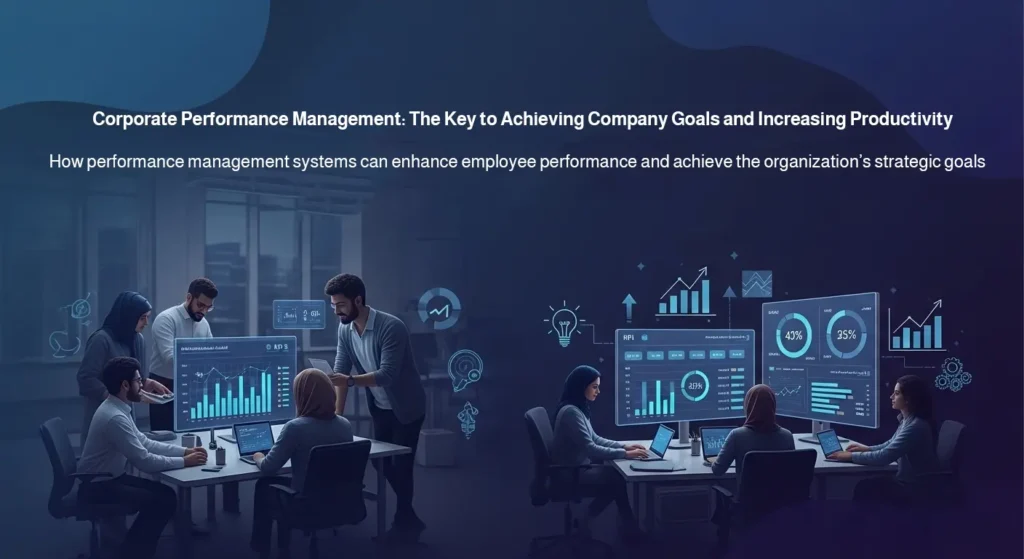
Success today depends not just on effort but on clarity, accurate measurement, and ongoing follow-up.
Contrary to common belief, performance management is no longer limited to annual reviews. Over 70% of leading companies now use continuous, data-driven systems to enhance productivity, employee engagement, and organizational results.
This guide provides a practical roadmap to implement performance management effectively, even without prior experience.
Understanding Performance Management
Performance management is a continuous system that helps organizations:
- Set clear goals
- Track progress
- Provide structured feedback
- Develop employee skills systematically
Key distinctions:
- Performance: Achieved results
- Performance Evaluation: Often periodic measurement
- Performance Management: Ongoing process integrating goal setting, tracking, and development
It’s a development-focused system, not just a control mechanism.
Why Organizations Need It
- Boost Productivity – Employees know exactly what’s expected
- Align Goals – Connect individual objectives to company strategy
- Reduce Errors – Early identification of issues
- Enhance Decisions – Promotions and rewards based on data
- Retain Talent – Continuous guidance increases employee satisfaction
Example: A sales department implemented KPI-based monitoring and increased sales by 18% in three months.
Core Tools and Methods
Continuous vs Annual Evaluation
|
Aspect |
Annual Review |
Continuous Management |
|
Frequency |
Once a year |
Monthly/quarterly |
|
Data Source |
Memory & perception |
Real-time metrics |
|
Transparency |
Often surprising |
Predictable and clear |
|
Actionability |
Limited |
Immediate feedback and adjustment |
Implementation Steps
- Define Objectives: Productivity, customer satisfaction, error reduction, etc.
- Select Metrics: 3–5 KPIs per role
- Engage Employees: Communicate purpose and benefits to ensure adoption
- Pilot Program: Apply system to a single department for 30 days
- Review and Adjust: Refine KPIs and processes based on results
Tip: Use Peak time for real-time performance tracking during trials.
Avoiding Performance Management Mistakes
- Treating the system as mere oversight
- Ignoring feedback
- Comparing employees unfairly
- Setting unrealistic targets
- Implementing without preparation
Overcoming Challenges
- Resistance to Change: Clear communication about benefits
- Unclear Goals: Define measurable objectives and train staff
- Manager Skill Gaps: Provide targeted training
- Bias: Standardize evaluation and use objective metrics
Measuring Success
- Higher engagement and commitment
- Clear goal alignment
- Reduced errors and delays
- Improved team results
- Increased employee satisfaction
Organizations that adopt data-driven, continuous performance management in 2026 will not only be more innovative and resilient but also better positioned to achieve Vision 2030 goals. Start implementing these strategies today using modern tools like Peak time to boost your team’s productivity and engagement.
Try the Optimal Solution for Your Organization Now
Instead of spending hours on manual reports, let technology handle the hard work while you focus on leading your team to excellence.
Request a Free Trial- June 3, 2025
- PeakTime Team
- 3:51 pm
Table of Content
Hide
أحدث المقالات
Recent Posts
- Fundamentals of Performance Management: Your Path to Administrative Excellence
- Performance Improvement Plan (PIP): Effective Strategies for Managing Underperformance in Organizations

- Employee Performance Measurement Using Key Performance Indicators (KPIs)

- Employee KPIs: A Strategic Tool to Boost Performance and Foster a Culture of Excellence
- Job Performance Evaluation: Its Role and Importance in Organizational and Employee Development

Performance Management FAQs
Why is performance management important in organizations?
Performance management plays a critical role in achieving organizational goals by enhancing employee performance and overall efficiency.
How does performance management differ from employee performance evaluation?
Performance management is a comprehensive process involving planning, execution, evaluation, and development, whereas performance evaluation focuses on assessing employee results at the end of a period.
What are the principles of effective performance management?
Key principles include transparency and fairness, focusing on results and processes, fostering collaboration between management and employees, and promoting continuous improvement and development.
How can organizational performance be improved?
By analyzing performance gaps, developing individual and team improvement plans, building a culture of excellence, and empowering employees while enhancing accountability.
What challenges are faced when implementing performance management?
Challenges include resistance to change, unclear goals and standards, weak managerial skills, and bias or subjectivity in the evaluation process.
How can technology enhance performance management?
Through digital performance management systems, data analysis, evidence-based decision-making, and real-time feedback.
What is the corporate performance management cycle?
It includes planning and goal setting, execution and monitoring, evaluation and review, followed by development and performance improvement.
How can employee performance be aligned with strategic organizational objectives?
By setting individual and team goals aligned with the organization’s objectives, and conducting regular performance monitoring and evaluation.