Enhancing Employee Performance: Key Strategies for HR Development and Productivity Boost
Improving employee performance is the driving force behind the success of any organization striving for excellence. When employees’ efficiency rises, the results are immediately reflected in higher productivity and exceptional output quality.
In this article, we provide a roadmap for effective human resource development strategies, exploring in depth the methods to enhance job performance and boost employee efficiency. We will examine the key factors that influence performance and the latest scientific approaches to evaluating and developing it, ensuring sustainable organizational success.
The Basics of Enhancing Employee Performance and Why It Matters for Organizations
In today’s business world, enhancing employee performance has become a strategic necessity for any organization aiming for excellence and sustainable success. Understanding and analyzing employee performance goes beyond simply tracking achievements; it is a comprehensive process that identifies each employee’s strengths and weaknesses and uncovers the factors affecting their productivity.
By grasping the fundamentals of performance, an organization can:
Boost productivity and achieve corporate goals more effectively
Improve the quality of work and the services provided to clients
Increase employee satisfaction and loyalty to the organization
Consequently, improving employee performance becomes a key tool for enhancing organizational efficiency and ensuring long-term success.
Factors Affecting Employee Performance
Understanding the factors that influence employee performance is the first step toward improvement. Performance is shaped by a variety of factors, which can be classified into internal and external influences.
Internal Factors: Skills, Abilities, and Motivation
Internal factors include:
Individual skills and abilities: These form the foundation of an employee’s performance, enabling them to carry out tasks efficiently.
Motivation and interests: These play a crucial role in determining the level of effort and the drive to achieve results.
An employee with the right skills and strong internal motivation is better equipped to deliver exceptional and sustainable performance.
External Factors: Work Environment and Organizational Culture
External factors also significantly impact performance and include:
Work environment: A comfortable and safe workplace encourages focus and high productivity.
Organizational culture: An environment that promotes innovation and engagement enhances team performance and supports collaboration among employees.
A supportive work environment and positive culture can substantially boost productivity and overall job satisfaction.
The Impact of Leadership on Team Performance
Effective leadership is a key factor that influences overall team performance. Different leadership styles can determine both productivity levels and employee satisfaction within the workplace.
Leadership Styles and Their Impact
| Leadership Style | Impact on Productivity | Impact on Job Satisfaction |
|---|---|---|
| Authoritative | Increases short-term productivity | May reduce job satisfaction |
| Transformational | Boosts long-term productivity | Enhances job satisfaction |
| Democratic | Encourages participation and higher productivity | Increases job satisfaction |
Choosing the right leadership style can have a direct effect on improving employee performance and strengthening organizational success.
Employee Performance Evaluation: Effective Methods and Tools
Employee performance evaluation is a vital process for any organization aiming to enhance efficiency and increase productivity. This evaluation serves as a key tool for monitoring employees and identifying areas for improvement.
Modern Performance Evaluation Models
Performance evaluation models are continuously evolving to meet the changing needs of organizations. These models include periodic reviews, performance interviews, and employee satisfaction surveys.
Key Performance Indicators (KPIs) and How to Define Them
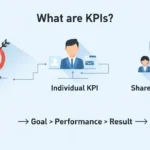
Key Performance Indicators (KPIs) are essential tools for measuring the success of employees and the organization as a whole. These indicators are defined based on the organization’s goals and strategic objectives.
Examples of Performance Indicators Across Sectors
Performance indicators vary by sector. For instance, in sales, KPIs might include the number of sales and revenue generated, while in the service sector, KPIs could focus on customer satisfaction and response time.
The Importance of Continuous Feedback
Continuous feedback plays a critical role in improving employee performance. By providing constructive insights and clear guidance, employees can enhance their performance and develop their skills.
Strategies to Enhance Employee Performance and Boost Productivity
Improving employee performance is the cornerstone of organizational growth in today’s digital era. To achieve sustainable productivity gains, technology must be integrated with human-centered leadership. Here are 15 actionable strategies:
SMART Goals
Set clear, measurable objectives to minimize wasted time and focus on tangible results.Continuous Feedback
Replace annual reviews with real-time sessions; immediate guidance accelerates skill development.Investment in Upskilling
Prioritize digital and AI training to stay market-relevant and enhance workforce efficiency.Work-Life Balance (WLB)
Studies show flexibility can boost productivity by 25%. Supporting mental health is an investment in performance.Task Automation (AI & Automation)
Leverage HRMS and ERP systems to free employees from routine tasks and channel their energy into creative work.Empowerment and Autonomy
Giving employees decision-making authority fosters self-responsibility and strengthens loyalty.Flexible Incentive System
Combine financial rewards with recognition to motivate long-term performance.People Analytics
Use data to anticipate challenges and make informed decisions that enhance team efficiency.Knowledge Management
Encourage knowledge sharing to reduce repeated errors and accelerate team output.Gamification
Turn tasks into interactive challenges to increase engagement and enthusiasm in the workplace.Holistic Health Support
Healthy, happy employees are more capable of delivering high performance and innovation.Encouraging Innovation
Reward new ideas to boost added value and create a competitive advantage.Transformational Leadership
Train leaders in coaching skills rather than micromanaging to build trust and confidence.Enhancing Employee Experience (EX)
Focusing on every detail of the employee journey reduces talent turnover and makes the organization more attractive.Continuous Improvement (Kaizen)
Adopt incremental development as a work philosophy to ensure sustainable, cumulative performance growth.
Performance Monitoring and Human Resource Management
Performance monitoring is a fundamental aspect of human resource management, helping organizations enhance employee efficiency and achieve strategic goals. It relies on three main pillars:
Organizational Performance Management
This includes managing and improving employee performance through integrated systems that track both individual and team performance, allowing for achievement measurement and identification of development areas.Data Analysis
Leveraging data to identify strengths and weaknesses in employee and team performance enables informed, evidence-based decisions that support organizational objectives.Continuous Evaluation
Regular performance monitoring improves work quality, develops employee skills, and ensures that organizational goals are met efficiently.
Elevate Your Team’s Performance Now with PeakTime
- Easily track individual and team progress
- Analyze performance to make data-driven decisions
- Organize projects and tasks to enhance team collaboration
Challenges and Obstacles and How to Overcome Them
Resistance to Change: Communicate clearly, explain the benefits, and involve employees in planning.
Low Motivation: Provide rewards and continuous recognition.
Skill Gaps: Implement targeted, ongoing training programs.
Unsupportive Work Environment: Improve workspace conditions and foster collaboration.
Improving employee performance and managing human resources is not optional—it is a strategic necessity for any organization striving for excellence and sustainable growth. By implementing integrated strategies—including setting SMART goals, providing continuous training and development, offering both financial and non-financial incentives, adopting modern technology, and creating a motivating work environment—organizations can significantly enhance employee efficiency and productivity.
Continuous performance monitoring, data analysis, and regular evaluations also enable management to make informed, precise decisions, ensuring organizational goals are achieved effectively. Ultimately, investing in employees as a core element of success directly impacts work quality, customer satisfaction, and the organization’s ability to navigate future challenges.
Key Takeaway: Exceptional employee performance is not accidental; it results from clear strategies, a supportive work environment, and effective human resource management.
أحدث المقالات
Recent Posts
- Fundamentals of Performance Management: Your Path to Administrative Excellence
- Performance Improvement Plan (PIP): Effective Strategies for Managing Underperformance in Organizations

- Employee Performance Measurement Using Key Performance Indicators (KPIs)
- Employee KPIs: A Strategic Tool to Boost Performance and Foster a Culture of Excellence
- Job Performance Evaluation: Its Role and Importance in Organizational and Employee Development