
Top 10 Effective Communication Techniques to Boost Team Unity in the Workplace
Does your team struggle with effective communication and mutual understanding at work despite everyone’s efforts?
Do you notice a drop in team spirit or an increase in misunderstandings and distance between colleagues?
This is quite common in modern workplaces. The root cause is often a lack of effective communication—one of the key factors that can lead to team fragmentation, lower productivity, and project delays, even when individual talents are abundant. Communication isn’t just about exchanging information; it’s the foundation for fostering collaboration and teamwork, creating a positive, motivating work environment, and achieving shared goals.
In this article, we explore the top 10 effective communication techniques in the workplace that strengthen team unity, drawing on the latest studies and best practices in high-performance team management. You’ll discover practical strategies to build a work environment based on mutual understanding and collective support.
What Is the Importance of Effective Communication in the Workplace?
Effective communication is a cornerstone of organizational success and achieving business goals. It goes beyond merely exchanging information—it improves coordination between individuals and departments, fostering collaboration and significantly boosting productivity.
It also enhances transparency and trust between employees and management, helping to build strong relationships and encourage team spirit. Clear communication accelerates problem-solving and enables faster, more effective decision-making through the accurate exchange of ideas and information.
Furthermore, good communication reduces conflicts and creates opportunities for employees to develop their skills and improve performance, leading to a more positive work environment where staff can express their ideas and needs effectively. Additionally, it strengthens relationships with clients by ensuring a clear understanding of their needs and driving higher satisfaction.
How Does Effective Communication Impact Workplace Performance and Productivity?
- Increasing Transparency: Effective communication enhances clarity and trust between employees and management, keeping everyone informed about tasks and expectations while fostering accountability and teamwork.
- Building Cohesive Teams: It minimizes misunderstandings and friction, enabling teams to collaborate smoothly and solve problems efficiently.
- Enhancing Employee Engagement: Strong communication strengthens the relationship between management and staff, boosting positive interaction and active participation.
- Creating a Better Work Environment: Timely access to necessary information allows employees to work efficiently without delays or bottlenecks.
- Reducing Conflicts: Clear and effective communication lowers misunderstandings and friction, promoting a harmonious and productive workplace.
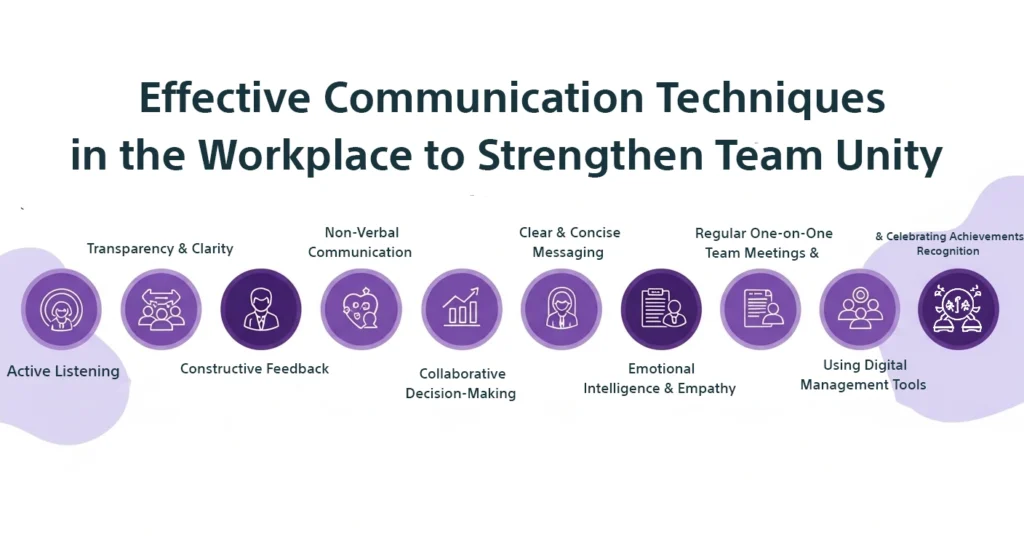
Effective Communication Techniques in the Workplace to Strengthen Team Unity
With the mix of traditional and flexible work styles in modern workplaces, adopting effective communication techniques becomes essential to ensure smooth information flow and foster mutual understanding, trust, and respect among employees. Implementing the following techniques forms the foundation for successful and productive communication.
1- Active Listening
Active listening involves fully engaging with the speaker, understanding their message, and responding thoughtfully.
- Uninterrupted Attention: Letting speakers express themselves fully builds respect and trust.
- Paraphrasing for Clarity: Restating key points, like saying, “So you mean…,” ensures mutual understanding.
- Non-Verbal Cues: Eye contact and nodding show engagement, strengthening team bonds.
According to a Harvard Business Review report, active listening is among the most critical skills linked to leadership success and fostering a positive organizational culture.
2- Transparency and Clarity
Clear and open communication fosters trust and aligns team efforts.
- Real-Time Updates: Sharing project developments keeps everyone informed and engaged.
- Safe Space for Opinions: Encouraging open dialogue promotes innovation and early issue detection.
3- Constructive Feedback
Constructive feedback drives improvement and strengthens team dynamics.
- Objective Approach: Using “I’ve noticed…” avoids personal criticism and reduces defensiveness.
- Balanced Feedback: Combining praise with suggestions boosts motivation and growth.
Benefits of Effective Feedback Implementation:
- Fosters a healthy work relationship built on trust and transparency.
- Empower individuals to recognize strengths and growth opportunities.
- Cultivates a sustainable learning culture within the team.
4- Non-Verbal Communication
Non-verbal cues significantly influence how messages are received.
- Body Language: Positive gestures like nodding enhance trust and engagement.
- Tone Consistency: Matching tone to message content ensures clarity and credibility.
5- Collaborative Decision-Making
Involving the team in decisions fosters ownership and creativity.
- Brainstorming Sessions: Free idea-sharing sparks innovation without immediate judgment.
- Inclusive Voting: Transparent voting ensures fair decisions and team buy-in.
6- Clear and Concise Messaging
Concise messages prevent confusion and streamline communication.
- Avoid Jargon: Simple language ensures accessibility for diverse team members.
- Confirm Understanding: Encouraging summaries or questions verifies message clarity.
7- Emotional Intelligence and Empathy
Empathy strengthens interpersonal connections and team cohesion.
- Understanding Emotions: Recognizing colleagues’ feelings fosters supportive interactions.
- Managing Reactions: Staying calm ensures professional and respectful communication.
8- Regular One-on-One and Team Meetings
Scheduled meetings build trust and alignment.
- Personal Check-Ins: One-on-one sessions address individual challenges and goals.
- Short-Term Objectives: Regular reviews set achievable targets, boosting motivation.
9- Leveraging Technology: PeakTime Platform
Tools like PeakTime enhance communication and task management.
- Time Tracking: Monitoring work hours improves productivity analysis.
- Seamless Collaboration: Real-time updates and task prioritization reduce disruptions.
Smart Employee Activity Reports
Monitor your team's performance with precision, generate detailed activity insights, and make fast, reliable decisions to drive your organization's productivity and efficiency.
10- Celebrating Achievements and Recognition
Acknowledging successes boosts morale and team spirit.
- Public Recognition: Praising efforts openly foster a culture of appreciation.
- Peer Encouragement: Promoting mutual recognition strengthens team bonds.
Barriers to Effective Communication in the Workplace
Communication barriers in the workplace can be human, organizational, or technical, directly affecting the quality of information exchange and decision-making. Some of the most common barriers include:
1. Unclear Goals and Messages
When objectives or management messages are not clear and understandable to everyone, misunderstandings arise, impacting team performance, scattering efforts, and weakening coordination.
2. Lack of Data and Information
Delayed or inaccurate information reduces the ability to make informed decisions and weakens the connection between different departments, limiting execution efficiency.
3. Weak Formal Communication Channels
The absence of well-defined internal communication channels or over-reliance on informal methods can result in lost or distorted messages and erode trust in organizational communication processes.
4. Individual and Emotional Differences
Cultural and personal differences, along with varied thinking styles, affect how messages are received and understood. Biases or lack of trust among employees also hinder information flow and reduce collaboration.
5. Language and Organizational Barriers
Using ambiguous language or technical jargon without clarification, combined with a complex organizational structure, can make communication between different levels within the organization difficult.
6. Work Environment and Its Impact
Physical and technical conditions, such as inadequate technology, noise, or poorly designed office spaces, affect the effectiveness of daily communication among teams.
Additional Tips for Building an Effective Communication Culture
Start with Leaders: Lead by Example
Leaders should model effective communication principles, as their behavior influences the rest of the team and encourages members to adopt the same approach.
Ongoing Communication Skills Training
Investing in continuous training programs to develop communication skills strengthens the team’s ability to handle challenges with clarity and better understanding.
Regularly Review and Improve Communication Tools
Periodically assessing the tools and channels used for communication ensures they meet the team’s needs and supports the adoption of new techniques that enhance effectiveness and productivity.
After exploring effective communication techniques and strategies in the workplace, it becomes clear that communication is the backbone of any successful team. It fosters collaboration and strengthens mutual understanding among team members. By thoughtfully applying these techniques, leaders can build cohesive teams characterized by high productivity and the ability to achieve shared goals efficiently.
Start with a simple step—implement just one technique within your team—and over time, you’ll see a positive impact on performance and team spirit. Work will become a more engaging, effective, and sustainable experience.
Frequently Asked Questions
أحدث المقالات
Recent Posts
- Fundamentals of Performance Management: Your Path to Administrative Excellence

- Performance Improvement Plan (PIP): Effective Strategies for Managing Underperformance in Organizations

- Employee Performance Measurement Using Key Performance Indicators (KPIs)

- Employee KPIs: A Strategic Tool to Boost Performance and Foster a Culture of Excellence

- Job Performance Evaluation: Its Role and Importance in Organizational and Employee Development
