
Employee Performance Measurement Using KPIs
Employee performance evaluation is a fundamental component in modern workplaces, as it helps identify skill levels and uncover individual strengths and weaknesses. Organizations rely on Key Performance Indicators (KPIs) as an effective tool to measure employee performance and track the achievement of job objectives. This approach supports identifying areas for improvement, boosting productivity, and fostering continuous development at both individual and team levels.
The Concept and Importance of Key Performance Indicators (KPIs)
Key Performance Indicators (KPIs) are essential tools for assessing organizational performance and achieving strategic goals. KPIs are quantitative and qualitative metrics used to evaluate how effectively a project or organization meets its strategic and operational objectives.
Definition of Key Performance Indicators (KPIs)
Key Performance Indicators (KPIs) are essential tools for measuring how successfully organizations achieve their strategic and operational goals. They represent quantitative and qualitative metrics that provide clear insight into current performance and help guide improvement decisions. The fundamental difference between goals and KPIs lies in their purpose: goals define the desired outcomes, while KPIs measure progress toward achieving them.
Applying SMART KPIs ensures effective performance measurement by making indicators specific, measurable, achievable, relevant, and time-bound. This approach positively impacts the performance of individuals and teams, as highlighted in the article on employee and team performance indicators.
Fundamentals of Job Performance Measurement
Performance measurement plays a vital role in aligning employee performance with an organization’s strategic objectives. By using Key Performance Indicators (KPIs), organizations can evaluate employee performance accurately and effectively.
Linking KPIs to Strategic Goals
KPIs must be directly aligned with an organization’s strategic goals. This means that every performance indicator should have a clear and measurable impact on achieving core business objectives.
For example, if one of the organization’s strategic goals is to increase customer satisfaction, KPIs such as customer service response time and customer satisfaction rate can be used to measure performance in this area.
The Impact of Performance Measurement on Employee Productivity
Performance measurement does more than assess employee output—it also serves as a powerful motivator for improvement. When employees clearly understand the KPIs used to evaluate their performance, they can better focus their efforts on achieving expected results.
How Performance Measurement Motivates Employees
Performance measurement motivates employees by:
-
Setting clear and well-defined goals.
-
Providing regular feedback on performance.
-
Linking performance outcomes to incentives and rewards.
This approach not only enhances individual employee performance but also contributes to improving overall organizational performance.
Characteristics of Effective Key Performance Indicators (SMART KPIs)
To evaluate employee performance effectively, organizations should use Key Performance Indicators (KPIs) that follow the SMART criteria. These standards ensure that KPIs are clear, measurable, and aligned with desired outcomes.
Specific
KPIs must be clearly defined, leaving no room for ambiguity or misinterpretation. For example, instead of a vague indicator like “improve customer service,” a more specific KPI would be “reduce customer wait time on the phone to two minutes.”
Measurable
KPIs should be measurable using quantitative data. This allows progress to be tracked and success to be objectively evaluated. For instance, “increase sales of Product X by 15% during the next quarter” is a measurable indicator.
Achievable
The goals set by KPIs must be realistic and attainable given available resources and potential constraints. For example, aiming to increase production by 50% without adding resources may be unrealistic and unachievable.
Relevant
KPIs should be directly aligned with the organization’s strategic objectives. If a company aims to expand its market share, a KPI such as “number of new customers acquired” would be highly relevant.
Time-bound
KPIs must include a clearly defined timeframe for achievement. For example, “achieve a 90% customer satisfaction rate within the next three months” establishes a clear deadline.
Practical Examples of SMART KPIs
-
Increase annual revenue by 10% during the next fiscal year.
-
Reduce employee turnover to 5% within the next six months.
-
Improve customer satisfaction rating to 4.5 out of 5 by the next quarter.
Types of Employee Performance Indicators
Employee performance indicators vary across several dimensions, including quantitative and qualitative, operational and strategic, as well as leading and lagging metrics. This diversity allows organizations to assess employee performance from multiple perspectives, enabling a more comprehensive understanding of job performance.
Quantitative vs. Qualitative Indicators
Quantitative indicators are measured numerically, such as the number of units produced or the number of customers served. Qualitative indicators, on the other hand, focus on the quality of performance, such as customer satisfaction or product quality.
When to Use Each Type
Quantitative indicators are most effective when measuring productivity or efficiency, while qualitative indicators are better suited for evaluating quality or satisfaction. In many cases, combining both types provides a more complete and accurate picture of overall performance.
Operational vs. Strategic Indicators
Operational indicators focus on day-to-day activities within the organization, such as cycle time or error rates. Strategic indicators are linked to long-term objectives, including revenue growth or market share expansion.
Leading vs. Lagging Indicators
Leading indicators help predict future performance, such as the number of new projects or investments in research and development. Lagging indicators, by contrast, measure outcomes that have already occurred, such as annual revenue or customer satisfaction levels.
The Importance of Balancing Performance Indicators
To ensure accurate and well-rounded performance evaluation, it is essential to maintain a balance among different types of indicators. This balance prevents overemphasis on one aspect of performance at the expense of others.
Adopting an integrated performance measurement framework provides organizations with a clear, panoramic view of their human capital efficiency. A well-balanced combination of quantitative and qualitative, operational and strategic, as well as leading and lagging indicators not only enhances evaluation accuracy but also serves as a cornerstone for proactive, data-driven decision-making. This approach strengthens performance management effectiveness and drives both employees and organizations toward achieving sustainable goals.
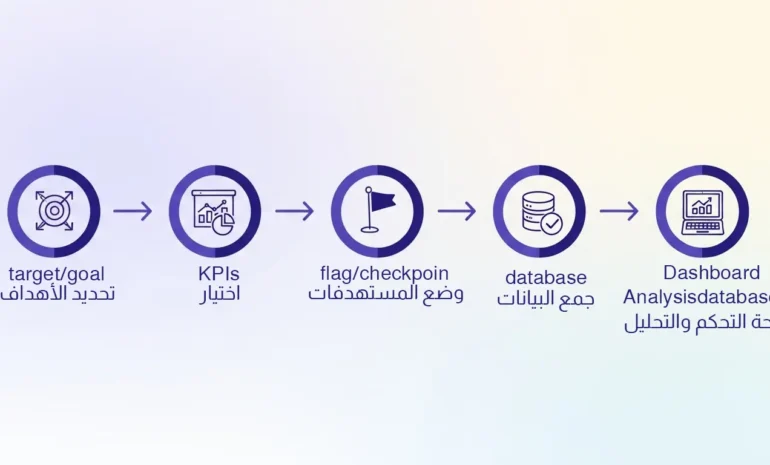
Steps to Develop a Performance Measurement System in an Organization
To ensure the success of employee performance evaluation, organizations must follow a structured process for developing a performance measurement system. This system goes beyond merely defining Key Performance Indicators (KPIs) to include integrated mechanisms that ensure effective assessment.
Define Strategic Goals
The first step in developing a performance measurement system is to clearly define the organization’s strategic goals. These goals serve as the primary reference for selecting appropriate performance indicators.
Select Relevant KPIs
Once strategic goals are established, organizations should choose KPIs that align with these objectives. The selected indicators must be SMART—specific, measurable, achievable, relevant, and time-bound.
Set Clear Standards and Targets
It is essential to establish clear standards and targets for each KPI. This ensures that performance evaluation is objective and consistent.
Determining Realistic Targets
Setting realistic targets requires analyzing historical data and reviewing industry best practices. Targets should be ambitious yet achievable, motivating employees without being unattainable.
Develop Data Collection and Measurement Mechanisms
Accurate performance measurement depends on effective data collection methods. Tools such as dashboards and data analytics technologies can help track progress and monitor KPIs efficiently.
Developing a performance measurement system requires a methodical approach, leveraging modern tools and techniques to ensure accurate, actionable, and impactful results.
Examples of Performance Measurement Indicators by Job Function
Key Performance Indicators (KPIs) are vital tools for enhancing employee performance across various departments. They are used to measure performance and guide employees toward achieving the organization’s strategic objectives.
KPIs for Senior Management
Senior management KPIs focus on measuring the overall performance of the organization, including:
-
Revenue growth rate
-
Gross profit margin
-
Return on Investment (ROI)
KPIs for Sales and Marketing Teams
Sales and marketing KPIs evaluate the effectiveness of marketing efforts and the success of sales strategies.
Most Effective Sales KPIs:
-
Number of new customers
-
Conversion rate
-
Average deal value
KPIs for Customer Service Teams
Customer service KPIs focus on measuring service quality and customer satisfaction.
-
Customer Satisfaction Score (CSAT)
-
Net Promoter Score (NPS)
-
Average response time
KPIs for Human Resources Teams
HR KPIs assess the effectiveness of HR policies and programs.
-
Employee turnover rate
-
Average time to fill a position
-
Employee engagement rate
KPIs for IT Teams
IT KPIs measure the performance of IT infrastructure and services.
-
System availability rate
-
Average issue resolution time
-
User satisfaction with IT services
These examples illustrate the diversity of KPIs and their close alignment with the roles and responsibilities of each team within the organization. By using tailored performance measurement models, companies can enhance their performance and achieve strategic goals more effectively.
Strategies for Implementing an Effective Performance Measurement System
Implementing an effective performance measurement system requires well-planned strategies to ensure its success. While Key Performance Indicators (KPIs) are essential, they can fail if misused or poorly implemented.
Involving Employees in the Development Process
Engaging employees in the development of the performance measurement system is critical. When employees feel involved, they are more likely to accept and embrace the system.
Training and Raising Awareness About KPIs
Proper training should be provided to employees on how to use KPIs effectively. Educating staff on the importance of these indicators helps enhance overall performance.
Regular Review and Updating of KPIs
KPIs must be reviewed and updated regularly to ensure they remain aligned with organizational goals. This helps maintain the system’s effectiveness.
Suggested Review Schedule:
-
Quarterly review of KPIs
-
Annual updates or updates as needed
Linking Performance Results to Incentives and Rewards
Connecting performance measurement results to incentives and rewards is an effective strategy to motivate employees. This creates a competitive and engaging work environment.
Challenges of Implementing a Performance Measurement System and Their Solutions
Implementing a performance measurement system poses significant challenges for organizations. Despite the importance of Key Performance Indicators (KPIs) in enhancing job performance, many companies struggle to implement these systems effectively.
Employee Resistance to Change
One of the main challenges is employee resistance. Staff may worry that a new performance measurement system could negatively affect their evaluations or increase work pressure.
Strategies to Overcome Resistance:
-
Involve employees in developing the performance measurement system.
-
Provide training to explain the importance of KPIs.
-
Clarify how the new system will improve their personal performance.
Difficulty Measuring Qualitative Aspects
Measuring qualitative factors, such as job satisfaction or service quality, can be challenging. Using multiple data collection methods, like surveys and customer feedback, helps assess these aspects more accurately.
Challenges in Data Collection and Analysis
Accurately collecting and analyzing data is another common challenge. Performance management software and dashboards can streamline this process.
Strategies to Overcome These Challenges
To address these challenges, organizations can:
-
Set clear, well-defined performance measurement goals.
-
Choose KPIs that align with strategic objectives.
-
Provide employees with training on using performance measurement tools effectively.
As Jack Welch once said: “The secret of success is not predicting the future, but managing it.” This highlights the importance of an effective performance measurement system in enabling organizations to manage their future more successfully.
Modern Tools and Technologies for Performance Measurement
Advanced tools and technologies are increasingly used to enhance employee performance measurement and improvement. In this context, performance management software plays a central role.
Performance Management Software
Performance management software serves as a powerful tool that enables organizations to accurately and efficiently track employee performance while supporting continuous evaluation and development. The market offers a variety of specialized solutions to achieve this goal, such as PeakTime, which provides comprehensive HR management functionalities and focuses on performance tracking, helping organizations boost productivity and achieve their strategic objectives.
Dashboards
Dashboards offer a comprehensive view of both employee and organizational performance. They facilitate informed decision-making by presenting data in a clear, actionable format.
Data Analytics and Artificial Intelligence
AI technologies and data analytics allow for advanced analysis of employee performance, helping identify strengths, weaknesses, and areas for targeted improvement.
Smart Employee Performance Measurement Using KPIs
With PeakTime Platform, your daily work data transforms into clear performance indicators that help boost productivity and enable more accurate decision-making.
Request a DemoFuture Trends in Employee Performance Measurement
Continuous performance evaluation has emerged as a key trend in human resource management. This approach allows organizations to monitor employee performance in real time and provide timely feedback.
Continuous Evaluation vs. Periodic Reviews
Continuous evaluation enhances employees’ ability to adapt to changes and steadily improve their performance. It also enables managers to make data-driven decisions with greater accuracy.
The Role of Technology and Artificial Intelligence
Technology plays a crucial role in facilitating continuous evaluation by offering advanced tools for data analysis and delivering valuable insights into employee performance.
Integrating KPIs with HR Management Systems
Integrating Key Performance Indicators (KPIs) with HR management systems simplifies performance tracking and improves the accuracy of the data used in decision-making.
Evaluating employee performance using Key Performance Indicators (KPIs) is essential for achieving an organization’s strategic objectives. By applying SMART criteria in defining KPIs, organizations can enhance the accuracy of performance measurement and boost employee productivity. Effective KPIs enable management to make informed decisions regarding promotions and leadership appointments.
Organizations should continuously update and refine their KPIs to ensure alignment with changes in the work environment. Linking performance measurement results to incentives and rewards further motivates employees and strengthens overall organizational performance. By leveraging modern tools and technologies for performance assessment, organizations can maximize the benefits of their performance measurement processes.
Frequently Asked Questions (FAQ)
Key Performance Indicators (KPIs) are specific metrics used to measure the performance of employees or the organization as a whole, helping achieve strategic objectives.
KPIs differ from regular goals in that they are specific, measurable, linked to strategic objectives, and provide a clear view of performance.
Effective KPIs are specific, measurable, achievable, relevant, and time-bound according to SMART criteria.
This is done by identifying the organization’s main objectives and selecting indicators that measure actual progress toward achieving them.
They include quantitative and qualitative indicators, operational and strategic indicators, as well as leading and lagging indicators.
By defining strategic goals, selecting appropriate KPIs, setting clear targets, and developing data collection and measurement mechanisms.
Challenges include employee resistance to change, difficulty measuring qualitative aspects, and issues with data collection and analysis.
By involving employees in the development process, providing training and awareness on the importance of KPIs, and regularly reviewing and updating indicators.
They include performance management software, dashboards, data analytics, and artificial intelligence technologies.
- February 10, 2026
- PeakTime Team
- 2:43 pm
أحدث المقالات
Recent Posts
- Fundamentals of Performance Management: Your Path to Administrative Excellence

- Performance Improvement Plan (PIP): Effective Strategies for Managing Underperformance in Organizations

- Employee Performance Measurement Using Key Performance Indicators (KPIs)

- Employee KPIs: A Strategic Tool to Boost Performance and Foster a Culture of Excellence

- Job Performance Evaluation: Its Role and Importance in Organizational and Employee Development
