
The Ultimate Guide to Designing a Comprehensive Organizational Structure for All Types of Work
- Enhance internal communication across diverse teams.
- Accelerate the decision-making process.
- Improve performance efficiency in line with the demands of the fast-paced digital era.
The Concept of Organizational Structure in a Diverse Work Environment
- Support flexible work environments, including in-office, hybrid, and remote setups.
- Enhance digital communication across diverse teams.
- Facilitate process coordination through digital platforms and project management tools.
- Boost productivity and foster innovation within the organization.
Fundamental Principles of Organizational Structure
To ensure an effective organizational structure in today’s diverse work environments, several key principles must be considered. These principles enhance productivity and foster collaboration across all types of teams—on-site, hybrid, or fully remote:
Clarity of Roles and Responsibilities
Clearly define each employee’s tasks and responsibilities to ensure everyone understands what is expected of them. This reduces confusion and maintains accountability, regardless of geographic location.Decentralization and Team Empowerment
Empower teams to make timely and effective decisions without relying on a long hierarchical chain. This increases operational flexibility and allows the organization to respond swiftly to changes.Enhanced Digital Communication Channels
Connect all hybrid teams through advanced communication tools such as Slack, Microsoft Teams, and Zoom. This ensures continuous, direct communication across all departments.Integration of Technology and Digital Tools
Leverage task management platforms, virtual meeting systems, and digital performance analytics to streamline coordination, track progress, and provide accurate data for informed decision-making.Inclusive Organizational Culture
Foster values of collaboration, transparency, and corporate belonging. This encourages all teams to actively contribute to company goals and reduces feelings of isolation among remote employees.
By adhering to these principles, organizations can build a comprehensive digital organizational structure that supports all work models while ensuring high productivity and effective collaboration across diverse teams.
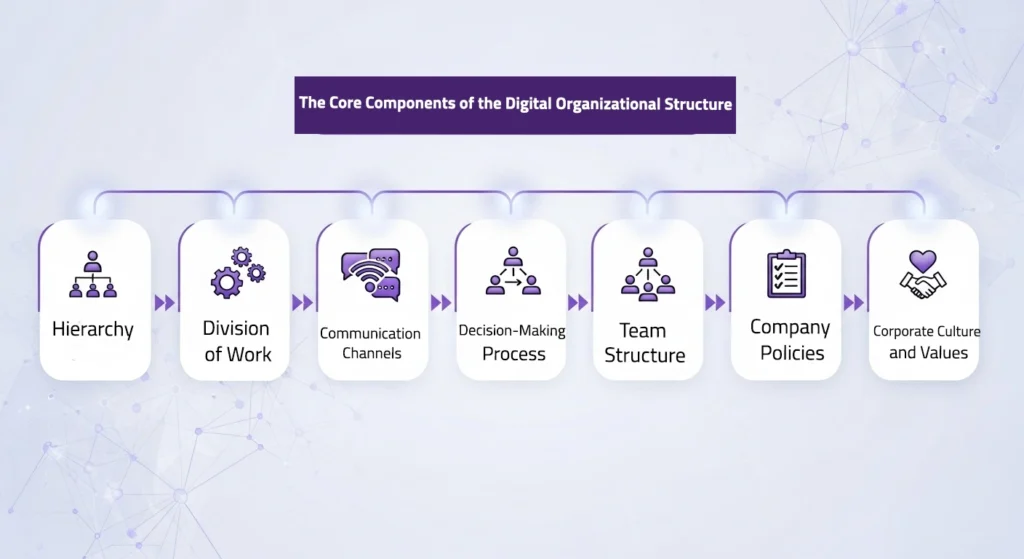
Key Components of an Organizational Structure
A digital organizational structure is built from a set of key components that work together to ensure effective organization and achieve institutional goals efficiently:
Hierarchy:
Defines levels of authority from top management to operational staff, clarifying reporting lines and decision-making paths. This reduces confusion and ensures clear responsibilities.
Division of Work:
Tasks and functions are distributed according to skills and specializations, enhancing expertise and efficiency while minimizing overlaps in responsibilities.
Communication Channels:
Specifies formal and informal methods for information flow between departments and individuals, whether via email, digital collaboration tools like Slack and Teams, or virtual meetings, facilitating coordination and reducing errors.
Decision-Making Process:
Determines the degree of centralization or decentralization in decisions, allowing remote teams to make quick and effective choices in line with the fast-paced digital work environment.
Team Structure:
Outlines the number of teams, their roles, and how they coordinate within the organization, including cross-functional teams and geographically distributed digital teams.
Company Policies:
A set of rules and procedures governing work, performance evaluation, incentives, and conduct, documented digitally to ensure compliance and consistent execution.
Corporate Culture and Values:
Principles and values that guide employee behavior, fostering belonging, collaboration, and transparency, while integrating in-office, hybrid, and remote teams into a cohesive work environment.
These components together form a comprehensive digital organizational structure that links roles, responsibilities, communication, and decision-making through digital tools, ensuring effective coordination and sustainable productivity across all teams, regardless of location or work type.
Types of Organizational Structures Suitable for Different Work Models
Organizational structures vary to meet the needs of companies based on their size, nature of work, and team models, whether in-office, hybrid, or fully remote:
Functional Structure: Organizes teams by core functions such as marketing, finance, and human resources. Ideal for traditional or hybrid teams, providing clarity in coordination between departments.
Divisional Structure: Divides the organization into units based on products or geographic regions. Suitable for geographically distributed teams operating semi-independently, allowing each unit to manage its own resources.
Matrix Structure: Combines functional and divisional approaches, where employees report to both a functional manager and a project manager. Best for teams working on multiple projects requiring cross-functional collaboration, in-office or remotely.
Hierarchical Structure: Features clear levels of authority, suitable for large, established organizations, reducing administrative complexity in traditional work environments.
Flat Structure: Minimizes management layers, accelerating decision-making. Ideal for startups and teams that prioritize collaboration and flexibility.
Network Structure: Relies on partnerships and outsourcing, with digitally distributed teams. Well-suited for remote and hybrid models, offering high flexibility and access to specialized expertise.
Circular Structure: Emphasizes shared decision-making and transparency, fostering a collaborative culture across diverse teams.
Virtual Structure: Fully geographically distributed teams that rely on digital tools for task management and communication. Perfect for fully remote teams, providing maximum flexibility while maintaining productivity and continuous coordination.
Selecting the appropriate structure depends on the nature of work, company size, team coordination methods, and available digital tools, ensuring high productivity and adaptability in diverse work environments.
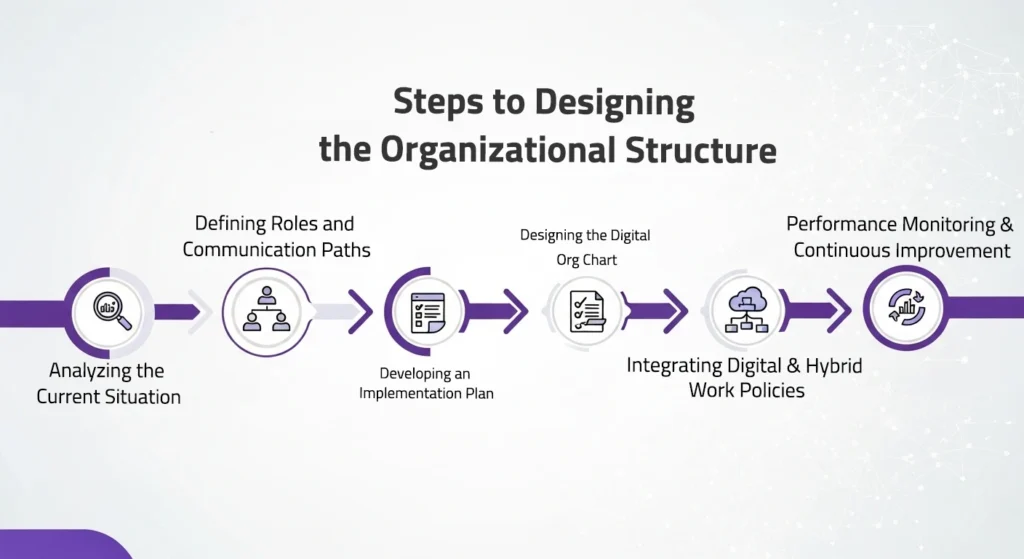
Steps to Design an Organizational Structure
To create an integrated and flexible organizational structure that supports all modern work models, follow these practical steps to ensure efficiency and coordination across teams:
1. Analyze the Current Situation:
Assess team performance to identify strengths and gaps in task coordination and decision-making, whether teams operate on-site or are geographically distributed.
2. Define Roles and Communication Paths:
Develop clear job descriptions and responsibilities for each employee, and establish suitable communication channels for each work model to ensure clarity of instructions and smooth coordination.
3. Develop an Implementation Plan:
Collaborate with HR and IT departments to create a comprehensive plan that includes digital tools, policies, and training programs necessary to support digital and hybrid work environments.
4. Design the Digital Organizational Chart:
Use tools like Miro or Canva to create a clear and flexible organizational chart that reflects role distribution and inter-team relationships, allowing easy updates as needed.
5. Integrate Digital and Hybrid Work Policies:
Formulate flexible policies that support remote and hybrid work, accompanied by training programs to familiarize employees with digital tools and new practices efficiently.
6. Monitor Performance and Continuously Improve:
Implement a regular performance monitoring system, collect feedback, and adjust the organizational structure continuously to align with team needs and evolving work dynamics.
By following these steps, companies can establish a comprehensive, flexible digital organizational structure that enhances collaboration, productivity, and decision-making speed for all teams, regardless of their geographic locations or work models.
Challenges of a Digital Organizational Structure and Best Practices to Address Them
The digital organizational structure in contemporary organizations faces several challenges that can affect its efficiency and sustainability. Key challenges include:
1. Resistance to Change:
Employees and management may struggle to adapt to role modifications or structural adjustments.
2. Administrative Bloat:
An excessive number of management layers can slow decision-making and weaken communication across levels.
3. Balancing Centralization and Decentralization:
Over-centralization delays responsiveness, while excessive decentralization may lead to coordination issues and loss of control.
4. Reliance on Outdated Technologies:
Using legacy systems limits operational efficiency and hampers adaptation to digital transformations.
5. Weak Organizational Culture:
A lack of values such as collaboration and transparency can result in internal conflicts and reduced institutional commitment.
6. Complexity of Horizontal Relationships:
Difficulty in coordinating performance across different departments negatively impacts overall productivity.
7. Growth and Scaling Challenges:
Maintaining efficiency and appropriate structure becomes harder as the organization expands.
8. Poor Communication About Changes:
Insufficient communication leads to unclear vision and employee confusion.
9. Proliferation of Job Titles and Floating Positions:
Excessive or unclear roles create imbalances within the organizational structure.
10. Continuous Changes in the Work Environment:
Ongoing shifts require regular updates and continuous flexibility in the organizational framework.
Addressing these challenges proactively is essential for building a resilient, efficient, and adaptable digital organizational structure.
Best Practices for Addressing Digital Organizational Structure Challenges
Build an organizational culture that embraces change and encourages acceptance of developments within the company.
Adopt a flexible and adaptable structural model that can respond to environmental and technological shifts.
Facilitate clear communication and define roles and responsibilities to minimize ambiguity and misunderstandings among teams.
Train senior and middle management in change management and decision-making skills.
Invest in modern technology to enhance operational efficiency and enable effective team connectivity.
Conduct regular reviews of the organizational structure and its performance to ensure alignment with company goals and market requirements.
Involve employees in the development of the organizational structure to boost engagement and improve productivity.
Establish clear mechanisms for delegating authority and balancing centralization with decentralization.
Strengthen knowledge management and information sharing to accelerate problem-solving and improve coordination.
Monitor and analyze the impact of structural changes on organizational performance, adjusting policies as necessary.
By following these practices, organizations can minimize obstacles within their organizational structure, ensuring its sustainability and success in today’s dynamic and complex work environment.
Practical Examples of Organizational Structure Models in Companies
Google – Flat Structure
Google utilizes a flat organizational structure aimed at reducing management layers and promoting direct communication between teams. Recently, the company eliminated the “managers of managers” layer in its Google Customer Solutions advertising unit, reflecting a move toward faster decision-making and reduced bureaucracy.
Source: Business Insider
Amazon – Hierarchical Structure
Amazon follows a hierarchical structure with both geographical and functional divisions. Teams are organized by functions such as marketing and engineering, while regional teams manage operations in specific areas, ensuring clear reporting lines and operational efficiency.
Source: Functionly.com
Designing flexible organizational structures has become a crucial element for the success of modern businesses in today’s dynamic environment. A flexible structure not only ensures clear distribution of roles and responsibilities but also enables teams to adapt quickly to changes, accelerates decision-making, and boosts productivity. By fostering an organizational culture that supports innovation and change, and by leveraging effective digital tools, companies can build a sustainable organizational structure that accommodates all work models while ensuring the efficient achievement of strategic objectives.
- November 11, 2025
- PeakTime Team
- 11:14 am
أحدث المقالات
Recent Posts
- Fundamentals of Performance Management: Your Path to Administrative Excellence

- Performance Improvement Plan (PIP): Effective Strategies for Managing Underperformance in Organizations

- Employee Performance Measurement Using Key Performance Indicators (KPIs)

- Employee KPIs: A Strategic Tool to Boost Performance and Foster a Culture of Excellence

- Job Performance Evaluation: Its Role and Importance in Organizational and Employee Development
